
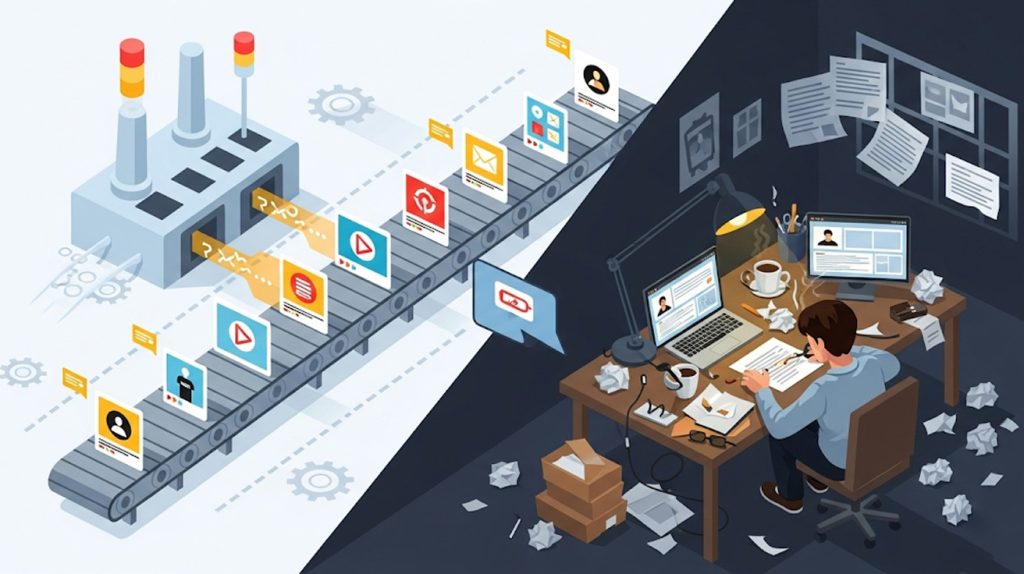
Do you feel like you’re constantly on a content creation treadmill? You finish a post, and before you can even take a breath, you’re already worried about what to create and share next.
This frantic, last-minute content scramble is a surefire way to burn out, and it’s also a fast track to creating rushed, low-quality content that doesn’t resonate with your audience.
But what if you could get ahead? What if you could spend a few focused hours a week creating all your content for the entire month? This is the power of content batching.
It’s a simple, strategic workflow that changes your content creation from a daily chore into a a powerful, repeatable system. When you batch your content, you save time, reduce stress, and dramatically improve the quality of everything you create.
However, content batching isn’t just about making a lot of posts at once; it’s about doing it the right way. In this guide, we’re going to break down the essential do’s and don’ts of content batching.
This is your roadmap to building a smarter, less stressful, and more effective content creation process. Ready to get ahead and build a content system that works for you? Let’s dive in.
The Do’s of Batching Content
Content batching is a powerful strategy, but it only works if you do it correctly. This isn’t about rushing to get things done; it’s about being strategic and intentional with every step. The first half of our guide focuses on the “do’s”—the essential habits you need to build to make content batching a sustainable and effective part of your routine.
1. Do: Review Your Best-Performing Content First
Before you create a single new post, take a look at your past work. Your analytics are a goldmine of information that tells you exactly what your audience loves and what they want to see more of.
By reviewing your top-performing content, you’re not guessing what to create next; you’re using data to guide your decisions. This ensures that the content you’re about to batch is valuable, relevant, and has the highest chance of success.
2. Do: Simplify Your Content Creation Process
Batching thrives on efficiency, and the best way to be efficient is to have a clear, repeatable process. Break down your content creation into distinct, manageable stages. Instead of creating one post at a time, you can:
- Brainstorm all your ideas for the week.
- Write all your captions and scripts at once.
- Design all your graphics and edit all your videos in one session.
By separating these tasks, you’re able to get into a state of “deep work” for each stage. This focused approach saves you from constantly switching gears and allows you to produce higher-quality work in less time.
3. Do: Brainstorm and Research FIRST
Never start a batching session with a blank page. The most successful creators separate idea generation from creation. Before you sit down to write or design, you should already have a well-researched list of topics.
This prevents you from running into creative block in the middle of a batching session. Spend time gathering ideas from your audience, analyzing your competitors, and doing keyword research. This intentional preparation is what allows your creative work to flow without interruption.
The Don’ts of Batching Content
Content batching is a powerful system, but it has its pitfalls. Just as important as knowing what to do is knowing what notto do. Many creators make these simple mistakes that can undermine their efforts and lead to burnout. This section is your guide to avoiding the common traps of content batching.
4. Don’t: Multitask
The biggest myth in productivity is that multitasking saves you time. It doesn’t. When you try to write a caption, edit a photo, and answer DMs all at the same time, you’re constantly switching contexts. This forces your brain to work harder and makes you less efficient. When you’re batching, you should be doing a single task. For example, if you’re writing captions, you’re just writing captions. This allows you to get into a state of “deep work,” where you can produce higher-quality content faster.
5. Don’t: Jump into Creating Without a Plan
Batching is not a substitute for planning. It’s the final step in a strategic content process. Trying to batch without a clear plan is like trying to build a house without blueprints.
You’ll get frustrated, waste time, and end up with a low-quality result. Before you sit down to create, you should already have a content calendar that lays out your topics, formats, and goals. This plan guides your batching session and ensures every piece of content you create has a purpose.
6. Don’t: Rush Yourself
The goal of batching is not to create a massive amount of content as quickly as possible. The goal is to produce high-quality, valuable content efficiently. Rushing yourself leads to “filler content”—posts that are meaningless and provide no value to your audience.
This type of content is a waste of your time and theirs. Instead of focusing on quantity, focus on intentionality. Take the time to create content that solves a problem, inspires your audience, or provides a moment of joy. When you do this, you’ll build a brand that is based on trust and value, not just on consistency.
Conclusion: The Habit of Consistency
You’ve just learned the essential do’s and don’ts of content batching. This isn’t just about creating content faster; it’s about building a sustainable system that works for you, not against you.
The most successful creators aren’t just consistent; they’re intentionally consistent. They have a plan, a process, and a deep understanding of what their audience needs.
By following the do’s and avoiding the don’ts, you’re no longer just posting; you’re building a strategic, data-driven brand that grows consistently over time.
Remember to:
- Do: Review your analytics, simplify your process, and brainstorm first.
- Don’t: Multitask, create without a plan, or rush your work.
It’s time to stop the last-minute scramble and start creating with purpose. Which of these do’s will you start with today?