
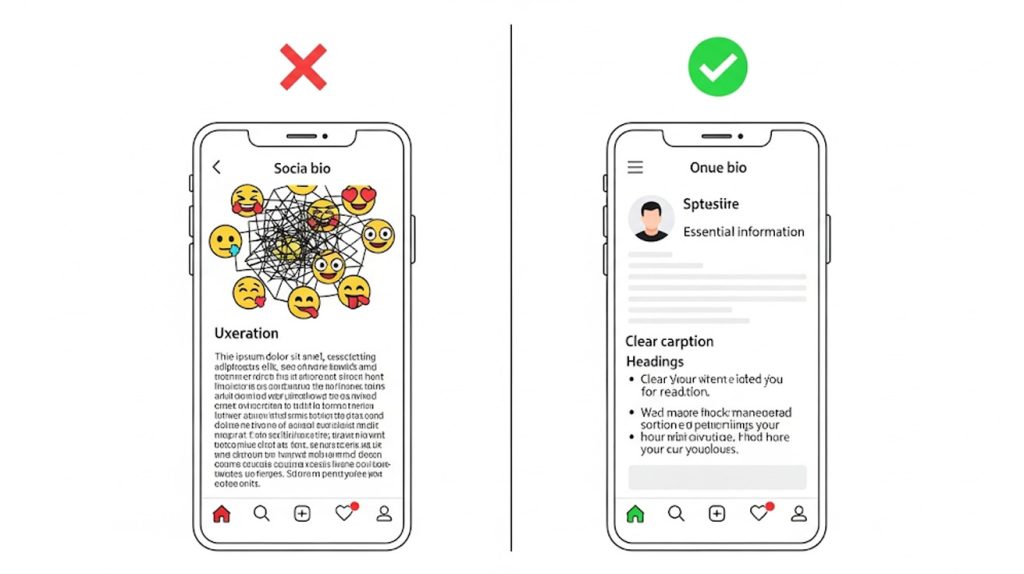
You’re a savvy marketer. You’ve got your content strategy, you know your niche, and you’re ready to grow. But then you hit a wall. Your Reel gets cut off too early, your caption is too long, or you can’t figure out why your bio looks weird.
These aren’t random glitches. They’re Instagram’s limits, and they are the unwritten rules of the algorithm.
Think of it like this: every platform has a set of technical boundaries. You can’t write a 10,000-word tweet, and you can’t post a 2-hour video on Instagram Reels. But instead of seeing these limits as a roadblock, you should see them as a blueprint.
A smart creator doesn’t fight the rules. A smart creator learns the rules and uses them to their advantage. Understanding these limits is the difference between a frustrating, time-wasting experience and a smooth, automated workflow.
In this guide, we’re going to break down the most important Instagram limits you need to know, and more importantly, we’re going to show you how to use them to your advantage to create content that wins. It’s time to stop guessing and start building with purpose.
Bio Limits: Your 150-Character First Impression
Your Instagram bio is prime real estate. It’s the first thing people see when they land on your page, and you only get 150 characters to make a good impression. That’s a tiny space, but it’s more than enough if you use it correctly.
Don’t see this limit as a restriction. See it as a challenge to be clear, concise, and compelling. You have to tell your audience three things, and you have to tell them fast:
- Who you are: Your title or what you do (e.g., “Social Media Strategist,” “Content Creator”).
- Who you help: Your specific target audience (e.g., “for creators,” “for small businesses”).
- What problem you solve: Your unique value proposition (e.g., “grow your influence,” “master Instagram growth”).
A perfect bio would look something like this:
Marketing Kip
Social Media Strategist
Helping creators, entrepreneurs, and brands grow their influence, audience, and income using smart, proven Instagram strategies.
Also, pay attention to the 5-link limit in your bio. This is a new feature that’s a huge win for marketers. Instead of being stuck with just one link, you can now link to your website, your lead magnet, your digital products, and other social media pages. This is a game-changer for driving traffic and converting followers into leads. Use these links strategically. Don’t just dump a bunch of random links. Organize them with a tool like Linktree or Beacons so you can track where your clicks are coming from.
When you master your bio, you’re building a powerful welcome mat for your brand. It’s a quick, clear signal that tells the right people they’re in the right place.
Caption & Hashtag Limits: The Secret to Going Viral
This is where a lot of creators mess up. They either write a tiny, one-sentence caption, or they write a novel. The same goes for hashtags—either they use two or they use 30 random ones.
Let’s break down these limits and turn them into your superpower.
Caption Limit: The 2,200-Character Goldmine
Your caption can be up to 2,200 characters long. That’s a lot of space! But you shouldn’t use it all just because you can. A great caption has a clear purpose.
- The Hook: Start with a bold, attention-grabbing first line. This is the only line people see before they have to click “more,” so make it count. It should state a problem, ask a question, or make a compelling promise.
- The Body: This is where you provide value, tell a story, or go deeper into the topic of your post. This is your chance to educate your audience and build a deeper connection.
- The Call-to-Action (CTA): End every caption with a clear CTA. Tell your audience exactly what you want them to do next. Do you want them to save the post, comment their thoughts, or click the link in your bio? Don’t leave them guessing.
Hashtag Limit: Max 30 Hashtags
You can use up to 30 hashtags per post. But here’s the secret: you don’t need to use all 30. A smart strategy is to use a mix of broad, niche, and branded hashtags to get your content seen by the right people.
- Broad hashtags (e.g., #socialmediamarketing) cast a wide net for discovery.
- Niche hashtags (e.g., #contentmarketingtips) attract a specific, targeted audience.
- Branded hashtags (e.g., #MarketingKip) help you build a community around your brand.
A good rule of thumb is to use a mix of about 10-15 well-researched, relevant hashtags. More than that can sometimes look spammy and get you a shadowban, which you want to avoid at all costs.
When you master your captions and hashtags, you’re not just posting content; you’re building a strategic funnel that moves people from discovery to conversion.
Reel & Story Limits: Master the Short-Form Game
If you want to win on Instagram, you have to master short-form content. But “short” has very specific rules. You can’t just post a video of any length and expect the algorithm to treat it the same. These limits are not arbitrary; they’re designed to keep users engaged and scrolling.
Reel Limit: The 90-Second Rule
Reels can be up to 90 seconds long. But here’s what you need to know: the most viral Reels are often much shorter. The average user’s attention span is a matter of seconds, not minutes.
Your goal isn’t to create the longest possible Reel. Your goal is to create a Reel that people watch to the end—and then watch again. A watch time of 100% or more is a massive signal to the algorithm that your content is valuable. This is why a 15-second Reel is often more powerful than a 90-second one. It’s easier to get a full-watch or a loop.
Use your Reel’s short time limit to your advantage. Hook them in the first 3 seconds, deliver your value quickly and concisely, and then leave them wanting more.
Story Limit: The 100-Story Marathon
You can post up to 100 Stories in a 24-hour period. But just like with Reels, this doesn’t mean you should. A good Story strategy is a consistent, daily presence, not a spam-filled, 100-slide monologue that nobody will watch to the end.
A good Story strategy is like a mini-show. It has a beginning, a middle, and an end. Use a mix of:
- Talking-head videos to build a personal connection.
- Polls and quizzes to get engagement and feedback.
- Behind-the-scenes content to show your authentic self.
- Text-based slides to share quick tips.
The best creators use anywhere from 5 to 15 Stories a day. They keep their audience engaged without overwhelming them. A long, unorganized Story dump is a surefire way to get people to tap right past your content.
When you respect the limits of Reels and Stories, you’re not just following the rules; you’re building a content strategy that’s perfectly aligned with how the platform works and how people actually consume content.
The Final Takeaway: Stop Fighting the Rules and Start Winning
You’ve got the blueprint. You now know the most important limits on Instagram—from the number of characters in your bio to the length of your Reels. And you’ve learned that these aren’t roadblocks; they’re your guide to creating better, more effective content.
So, what’s your next move?
Don’t let these rules intimidate you. Instead, use them as a simple checklist for every piece of content you create. Before you post:
- Did you use your bio limit to clearly state who you are and who you help?
- Is your caption hook powerful enough to stop the scroll?
- Are you using a mix of hashtags to attract a targeted audience?
- Is your Reel short and snappy, designed for maximum watch time?
- Are you using your Stories to build a daily connection?
The most successful creators and brands on Instagram aren’t the ones who get lucky. They’re the ones who understand the system and use it to their advantage. They know that a few strategic choices based on these limits can lead to massive, consistent growth.
It’s time to stop just posting and start building with purpose.